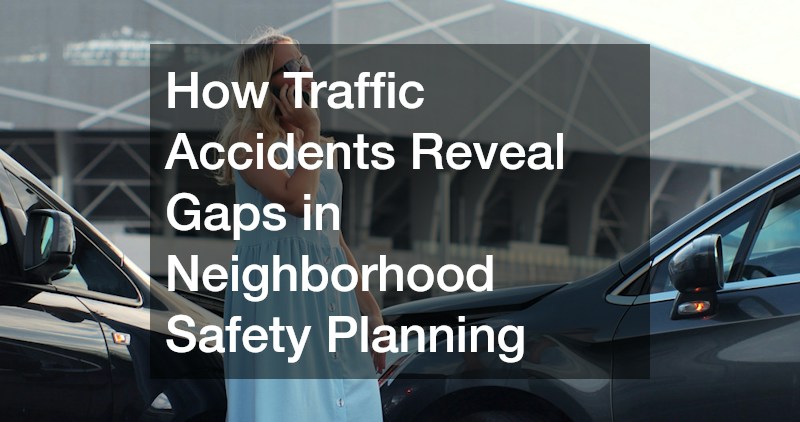
A car crash on a familiar street corner often leaves neighbors asking the same question: why did this happen here, and why has it happened before? Traffic accidents are rarely random events. They tend to cluster in places where street design, signage, lighting, or enforcement have quietly failed the community for years.
Understanding what these patterns reveal can help residents push for real change and know what steps to take if they or a loved one are affected.
Identifying Dangerous Intersections Before They Become Statistics
Many neighborhoods have at least one intersection that locals already know to approach with caution, even if city records have not caught up to that reality yet. Repeated near-misses, informal complaints, and word-of-mouth warnings often precede the data that eventually shows up in official crash reports. Residents who track these patterns informally are frequently ahead of the municipal planning process by months or even years. Recognizing these hot spots early gives communities a chance to advocate for changes before someone gets seriously hurt.
- Watch for intersections with limited sightlines due to parked cars, fences, or overgrown landscaping
- Note locations where multiple street types converge without clear right-of-way signage
- Pay attention to school zones or bus stops near high-speed roads
- Track informal reports from neighbors, delivery drivers, or local business owners
Examining How Street Design Contributes to Collisions
Street width, curve radius, and lane markings all influence how fast drivers actually travel, regardless of posted speed limits. Research on “design speed” versus “posted speed” shows that drivers unconsciously calibrate their speed to what the road geometry allows, not what a sign tells them. A street built with 12-foot travel lanes and gentle curves will produce higher average speeds than a street with 10-foot lanes and tighter turns, even when both carry the same 25 mph limit.
Wide, straight residential streets often encourage speeding because they feel more like thoroughfares than neighborhood roads. This is especially common in subdivisions built decades ago under standards designed for emergency vehicle access and snowplows, not pedestrian safety. Without visual cues like on-street parking, curb bump-outs, or street trees to narrow the perceived driving space, motorists default to highway-like behavior on streets lined with homes, driveways, and children at play. Poorly timed traffic signals or confusing lane merges can also force drivers into split-second decisions that increase risk. Intersections with short yellow-light intervals, obscured sightlines from parked cars or overgrown landscaping, or merge lanes that disappear too abruptly are common contributors to rear-end and T-bone collisions.
Even small design flaws, like a crosswalk placed just beyond a driver’s natural sightline, can compound into serious safety hazards over thousands of daily trips. When a crash occurs, this is often where the investigation should begin. Reviewing crash data alongside a street’s physical layout, sightlines, and signal timing can reveal patterns that a single police report might miss, and repeated incidents at the same location are rarely coincidental.
Traffic engineers sometimes describe this as the difference between a road’s design speed and its posted speed, and the gap between the two is where accidents tend to happen. Design speed is determined by physical features like lane width, curve radius, and sightlines, while posted speed is simply what a sign says. A street engineered for 45 miles per hour will rarely see drivers obeying a 25-mile-per-hour sign, no matter how many signs are posted, because the road itself is sending a stronger message than any placard.
Wide travel lanes, generous curb radii, and long unobstructed sightlines all subconsciously signal to drivers that higher speeds are safe, even when the posted limit says otherwise. Research from organizations like the National Association of City Transportation Officials has found that narrowing lanes by even a foot or two can meaningfully reduce average speeds. Similarly, a wide turning radius at an intersection lets drivers take corners fast without slowing down, increasing the risk to pedestrians in crosswalks.
Addressing this mismatch usually requires physical changes rather than just new signage. Common interventions include curb extensions, raised crosswalks, chicanes, and road diets that reduce the number of travel lanes to make room for bike lanes or medians. These changes cost more upfront than a new sign, but they tend to produce lasting reductions in both crash frequency and severity, which is why many cities now treat street redesign as a core safety strategy rather than a last resort.
Recognizing Lighting and Visibility Failures
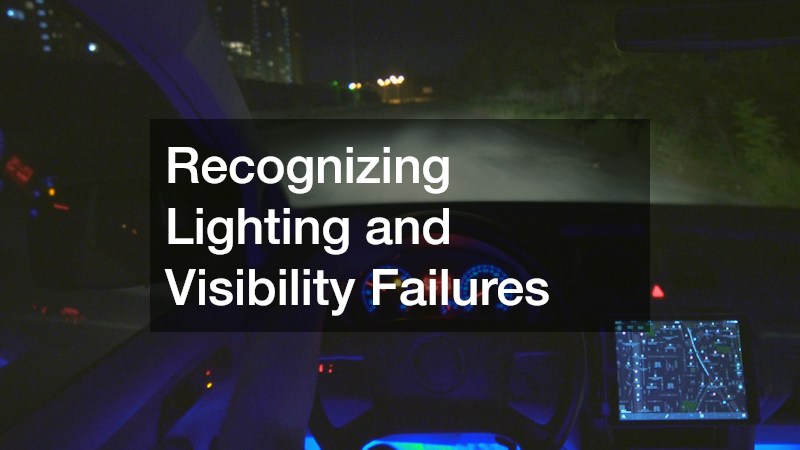
Poor street lighting is one of the most overlooked contributors to nighttime accidents, particularly in older neighborhoods where infrastructure has not kept pace with population growth. Dim or broken streetlights reduce a driver’s ability to see pedestrians, cyclists, and even other vehicles until it is too late to react safely. This problem tends to disproportionately affect lower-income areas, where lighting upgrades are often deprioritized in city budgets. Identifying these gaps is a critical part of understanding why certain blocks see more collisions than others.
- Report burned-out or flickering streetlights to the local public works department
- Note areas where tree canopy blocks existing light fixtures
- Flag crosswalks that lack dedicated overhead lighting
- Compare accident timestamps to sunset and sunrise times in the area
Evaluating Crosswalk and Pedestrian Safety Gaps
Crosswalks are meant to give pedestrians a predictable, protected path across traffic, but many neighborhoods have crossings that are faded, poorly placed, or missing entirely on high-traffic routes. A crosswalk painted on a road without a corresponding curb ramp or pedestrian signal offers little real protection. In many cases, the presence of a crosswalk gives residents a false sense of security that the area has already been made safe. Real pedestrian safety requires more than paint on asphalt.
When a pedestrian is struck in one of these gaps, the incident often exposes just how outdated a city’s safety infrastructure has become. Families affected by these situations sometimes reach out to personal injury lawyers to better understand whether the road design itself contributed to the outcome, separate from any driver error involved. That distinction matters because it can shape both the legal response and the community’s push for infrastructure repair.
Assessing Speed Enforcement and Traffic Calming Measures
Speed humps, narrowed lanes, and raised crosswalks are all examples of traffic calming tools that physically slow drivers down rather than relying on their willingness to follow posted limits. Neighborhoods that lack these measures often see higher average speeds, even on streets with heavy pedestrian activity. Enforcement alone, such as periodic police patrols, tends to produce only temporary reductions in speed. Long-term safety usually depends on physical design changes that make speeding uncomfortable or difficult.
- Speed cushions that slow cars but allow emergency vehicles to pass
- Curb extensions that shorten pedestrian crossing distance
- Raised intersections that signal drivers to slow down
- Chicanes or curved lane paths that discourage straight-line speeding
Understanding What Happens After a Serious Accident

Once a serious crash occurs, the aftermath often reveals just how unprepared a neighborhood was for the incident in the first place. Emergency response times, availability of nearby medical care, and even the condition of the road surface after the collision all become part of the broader safety picture. Residents dealing with injuries frequently find themselves navigating insurance claims, medical bills, and lost income all at once, which can be overwhelming without guidance. This is often the point where speaking with a personal injury lawyer becomes a practical step rather than a last resort.
A car accident lawyer can also help determine whether the crash was influenced by factors beyond the drivers involved, such as poor signage, malfunctioning traffic signals, or inadequate lighting. That kind of analysis can be difficult for an individual to pursue alone, especially while recovering from an injury. Understanding these contributing factors can also feed back into community advocacy efforts aimed at preventing similar accidents in the future.
Advocating for Long-Term Neighborhood Safety Improvements
Individual accidents, taken together, form a pattern that city planners and transportation departments cannot ignore forever, especially when residents organize and present clear evidence. Community meetings, petitions, and formal requests for traffic studies are all tools that neighbors can use to push for change. Documenting near-misses alongside actual collisions strengthens the case for intersection redesigns, new signals, or added lighting. Consulting a Personal Injury Attorney after an accident can sometimes provide documentation, such as accident reports and expert assessments, that also proves useful in these broader advocacy efforts.
- Request official crash data from the city or county transportation office
- Organize neighbors to attend city council or planning commission meetings
- Partner with local schools or business associations to amplify safety concerns
- Use social media or community boards to track recurring incident reports
Conclusion
Traffic accidents are rarely just isolated bad luck; they are often symptoms of deeper planning gaps that a community has the power to identify and address. Paying attention to patterns in intersections, lighting, crosswalks, and enforcement gives residents the evidence they need to advocate for real change. For those already dealing with the aftermath of a collision, understanding both the legal and infrastructural sides of the situation can make recovery less overwhelming. Taking that next step, whether it is attending a planning meeting or consulting a legal professional, turns a difficult experience into a catalyst for a safer neighborhood.